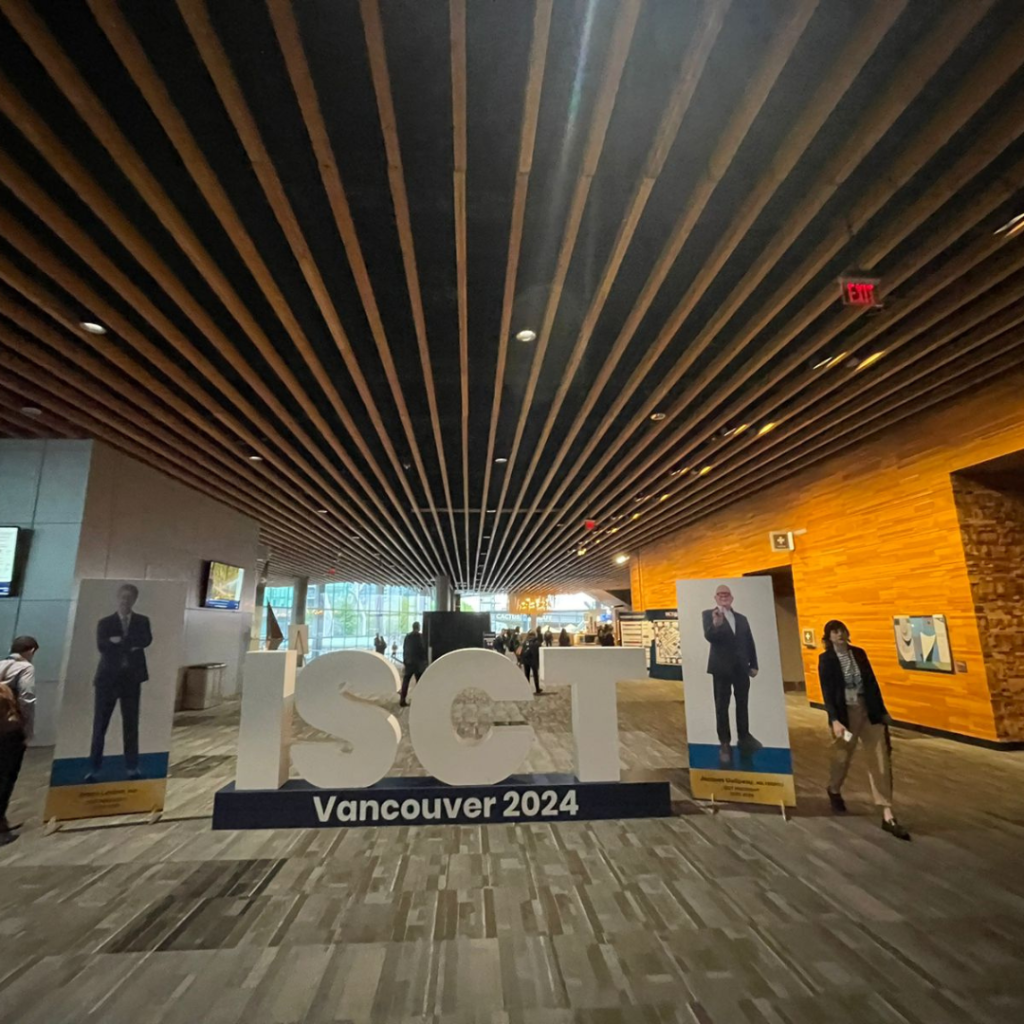
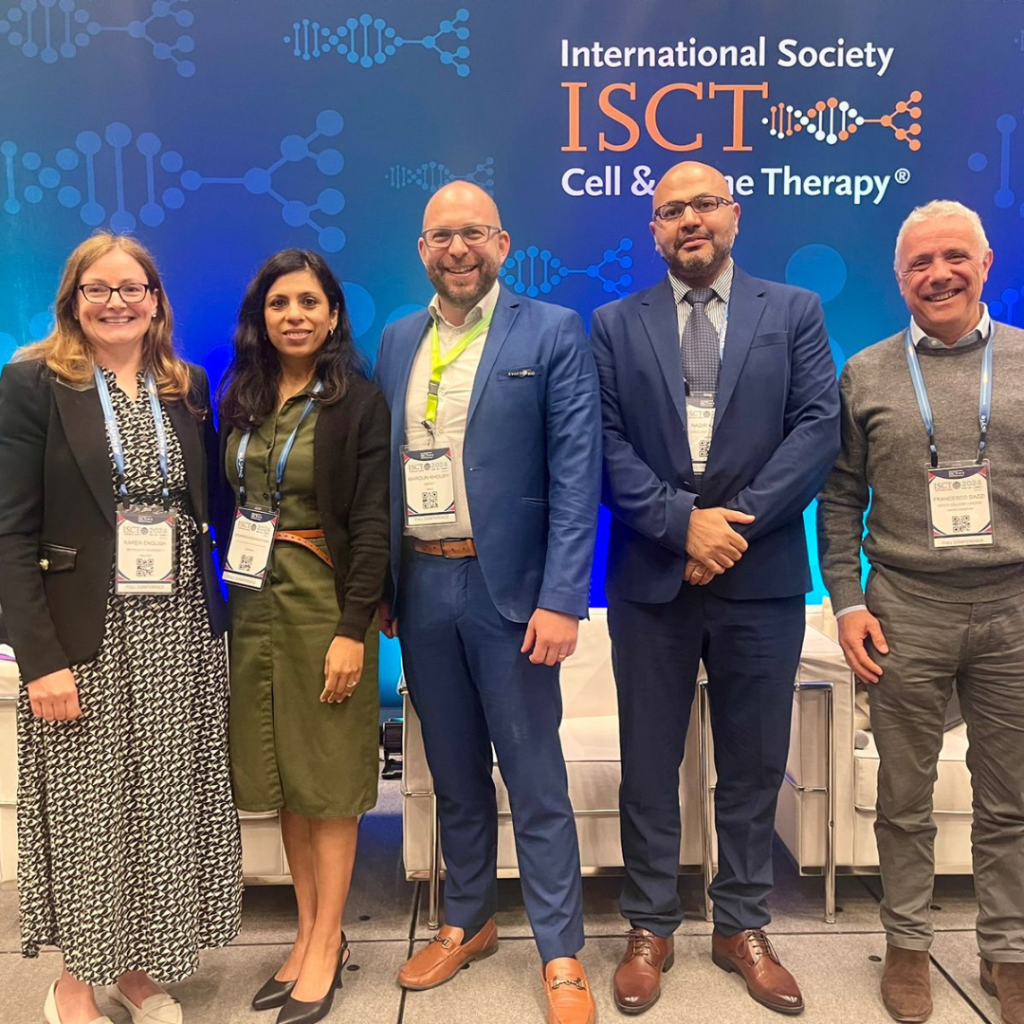
From May 29 to June 1, the annual meeting of the International Society for Intracellular Vesicles 2024 took place with more than 2,100 delegates from 61 different countries.
IMPACT was present with the outstanding participation of its director, Maroun khoury, who spoke about the challenges of clinical studies and new devices for advanced therapies, being invited as a panelist to three round tables of the event.
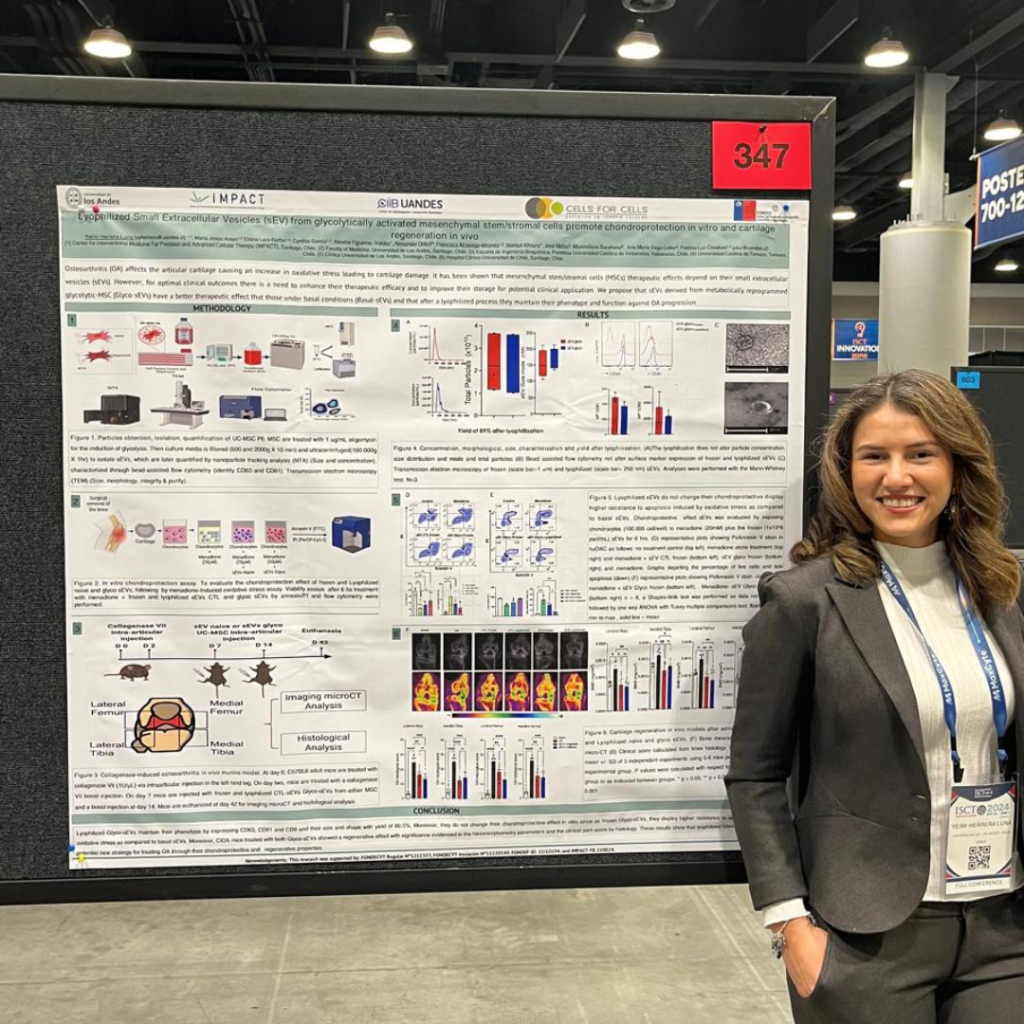
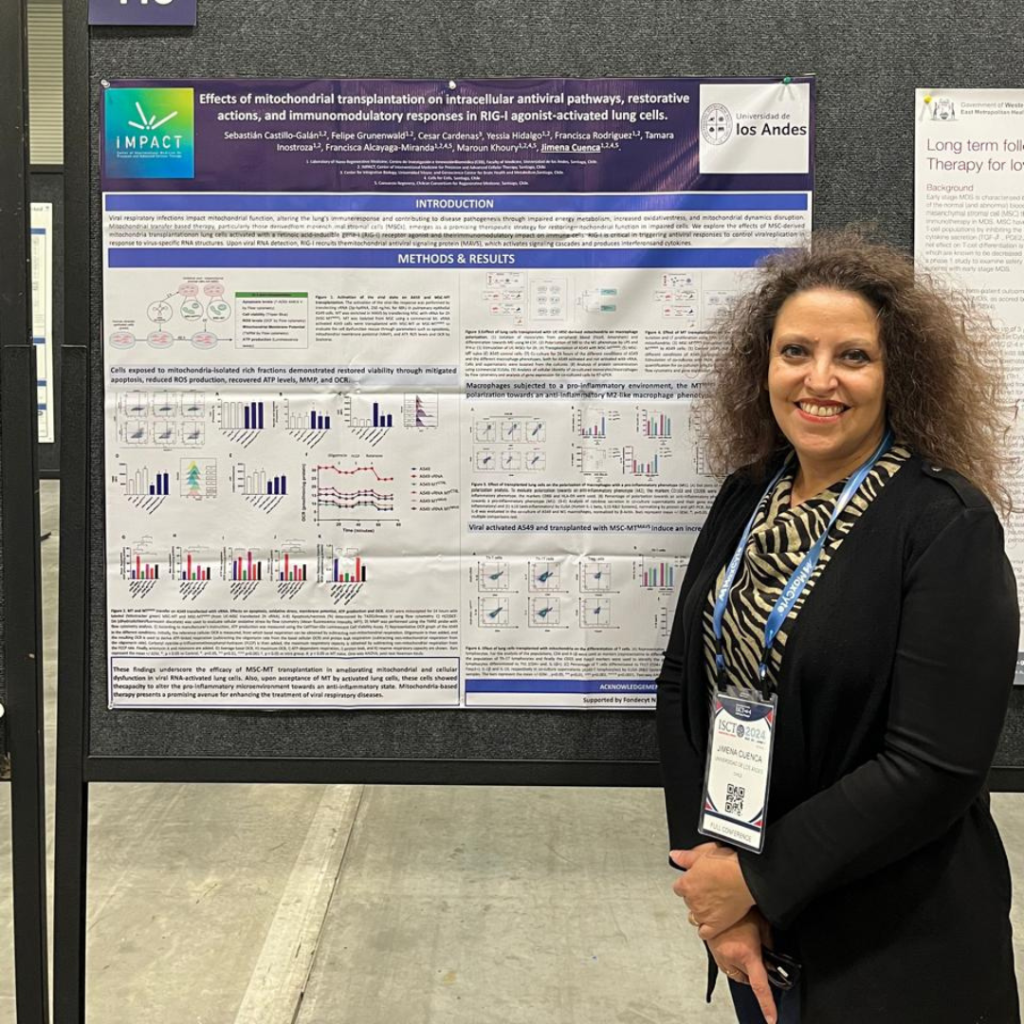
Moreover, Yeimi Herrera, research assistant, and Jimena Cuenca, principal investigator of IMPACT, presented their research in poster sessions during the event.
Our researchers were also invited by ISCT TV to participate in the coverage of the event as interviewees, having the opportunity to present their work through this platform.
AWARD FOR THE BEST ABSTRACT
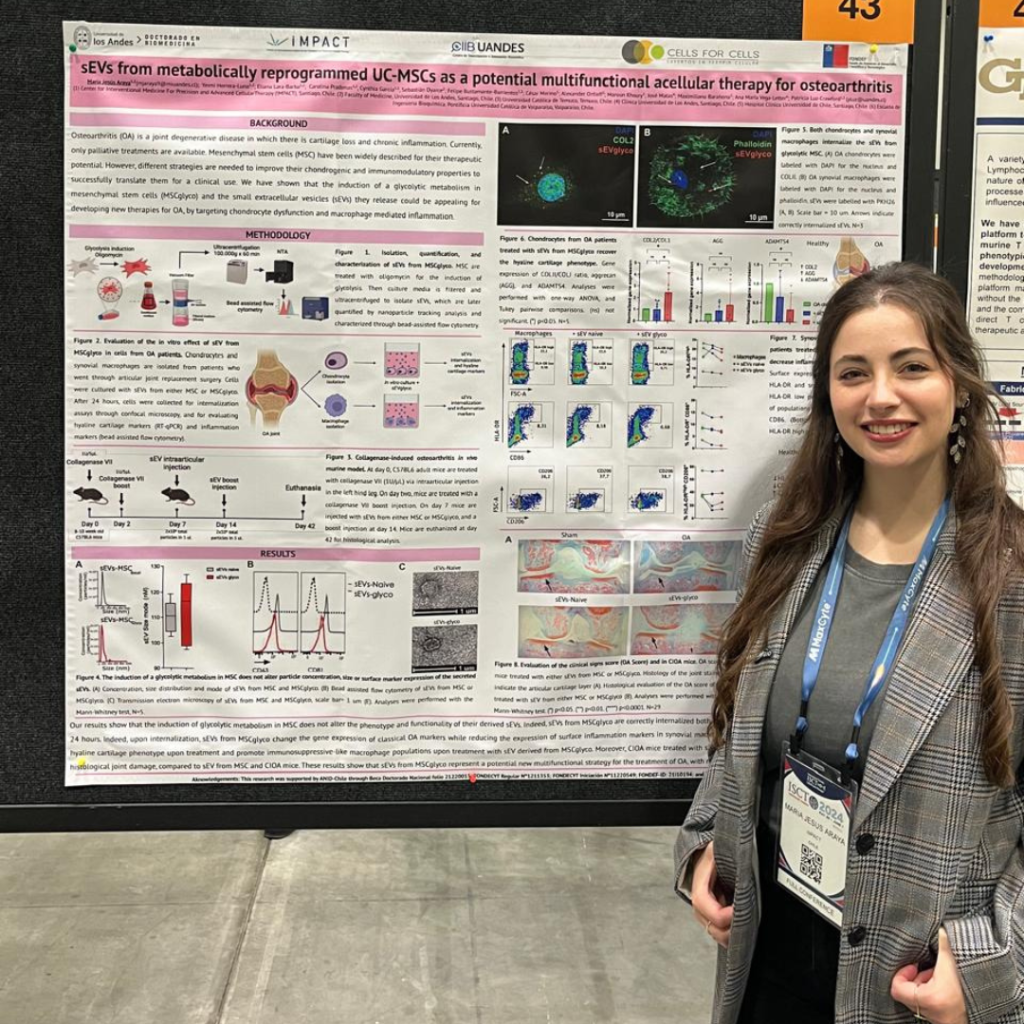
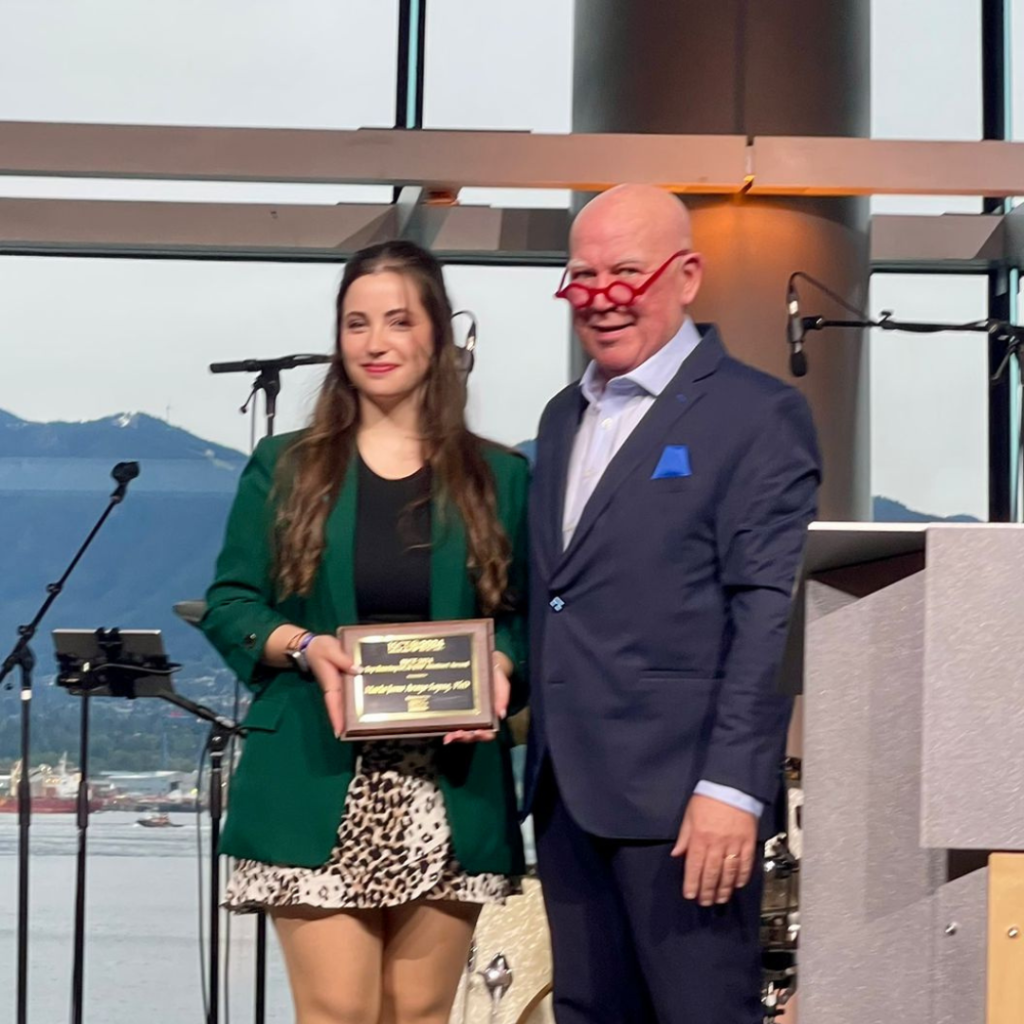
The research of María Jesús Araya Sapag, PhD student in Biomedicine at the Universidad de los Andes and part of IMPACT, won first place in the category “Young researchers from South and Central America”. Thanks to this distinction his work, entitled “sEVs from metabolically reprogrammed UC-MSCs as a potential multifunctional acellular therapy for osteoarthritis”, was presented in a short talk during the Exosomes and EVs session of the Annual Meeting of the International Society for Cellular Therapy (ISCT), held in Vancouver, Canada.
His research focuses on the development of an innovative therapy based on extracellular vesicles derived from glycolytic mesenchymal stem cells. This therapy targets patients with osteoarthritis, a degenerative joint disease that currently has no cure. The study proposes that these vesicles can reduce inflammation and promote regeneration of lost cartilage, thus addressing two of the main symptoms of osteoarthritis.
The work has been guided by Dr. Patricia Luz Crawford from UANDES and Dr. Farida Djouad from the University of Montpellier in France.
According to María Jesús, this achievement represents a significant opportunity for her doctoral training and opens the door to new collaborations with international experts in the area of innovative therapies. “This research is the result of several years of teamwork with dedicated scientists. I hope that this research can generate a real impact on people and that we can continue to grow as professionals doing science in Chile,” she concluded.