Between September 23 and 25, the 2025 Translational Medicine Congress (CMT 2025) took place, organized by the IMPACT center at the University of the Andes and the University of La Frontera (UFRO).
“Organizing the 2025 Translational Medicine Congress has been a privilege. Thanks to the participating entities and each of the national and international speakers who generously traveled to share their knowledge, we achieved a diverse and intellectually enriching meeting. But without a doubt, the most exciting thing was seeing future researchers participate with enthusiasm and celebrating together the launch of the Chilean Society of Translational Medicine (SOCHIMET), which marks a milestone in continuing to build collaborative science in our country,” said Francisca Alcayaga, principal investigator at the IMPACT Center and the University of the Andes.
Science that transcends the laboratory
CMT 2025 was divided into four days, each with a theme addressing key areas for the development of translational medicine: the first focused on cancer, the second on immunology and microbiota, the third on biomarkers, and the fourth on artificial intelligence and biomaterials. This week was accompanied by international and national leaders, who presented the results of various research projects.
International speakers:
Jonathan Brestoff (USA): mitochondria and inflammatory diseases.
Rafael Argüello, PhD (France): integration of multi-omic data to understand cellular metabolism.
Patricia Ybot-González, PhD (Spain): maternal nutrition and neural tube defects.
Marc Poulin (Canada): effects of intermittent hypoxia on the brain.
Todd Rasmussen (USA): biomaterials and tissue repair.
“At this conference, ‘From Science to Clinical Practice,’ researchers from Chile and around the world showed how cells, mitochondria, microbiota, biomarkers, and even mini-organs created in laboratories are becoming allies for more precise therapies, while artificial intelligence and biomedical engineering are transforming innovation into real results for patients. Science with impact, cells, and biological products with the purpose of improving lives,” said Maroun Khoury, director of the IMPACT Center.
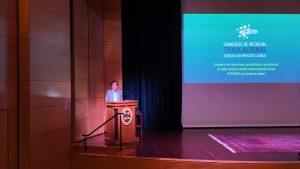
Humberto Palza – Centro IMPACT, Universidad de Chile
Gustavo Salguero-IDSC Colombia
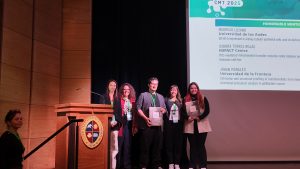
Winners of the best undergraduate and graduate poster
Spaces that promote young talent
This year, the congress also hosted two fundamental milestones. The Third UANDES-UFRO Translational Medicine Symposium, which consolidates national scientific collaboration around clinical innovation and, as a result of this joint work and the advancement of the discipline, the official signing of the Translational Medicine Society took place on the third day of the congress.
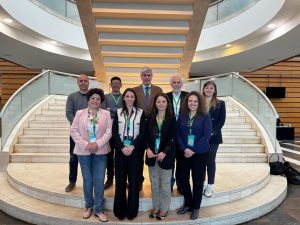
Founders and members of the Society for Translational Medicine
“We hope that this will not only be a new scientific society, but also the birth of a meeting place between basic research, clinical practice, and the needs of our patients. Translational medicine is a bridge, one that is destined to transform the knowledge generated in our laboratories into concrete solutions for preventing, diagnosing, and treating diseases, changing the lives of our patients,” explained Dr. Sebastián Illanes, vice president of the association.
The second milestone was the First Meeting of the Chilean Biomedical Students Network, a space to showcase and promote the young talent that is shaping the future of our discipline. The meeting featured two workshops: one led by Maroun Khoury on the importance of networking in science, and the other led by Carlos Ortiz, who taught students about the applications of microfluidics, microfabrication, and quantitative image analysis in biomedical research.
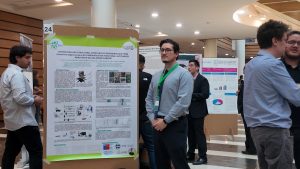
Poster session
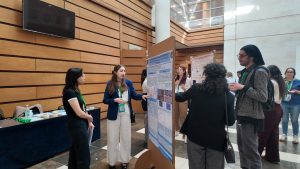
Poster session
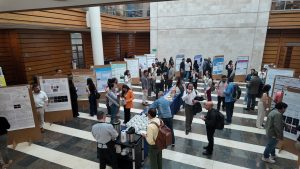
Poster session overview
The conference demonstrated that scientific research in Chile is not only advancing, but also connecting. Opportunities for collaboration, international participation, and the prominence of young talent mark a promising path for translational medicine, where laboratory discoveries are beginning to translate into real improvements in people’s health.
This event is sponsored by: Merck, Nanolive, Genexpress, Cell for cells.